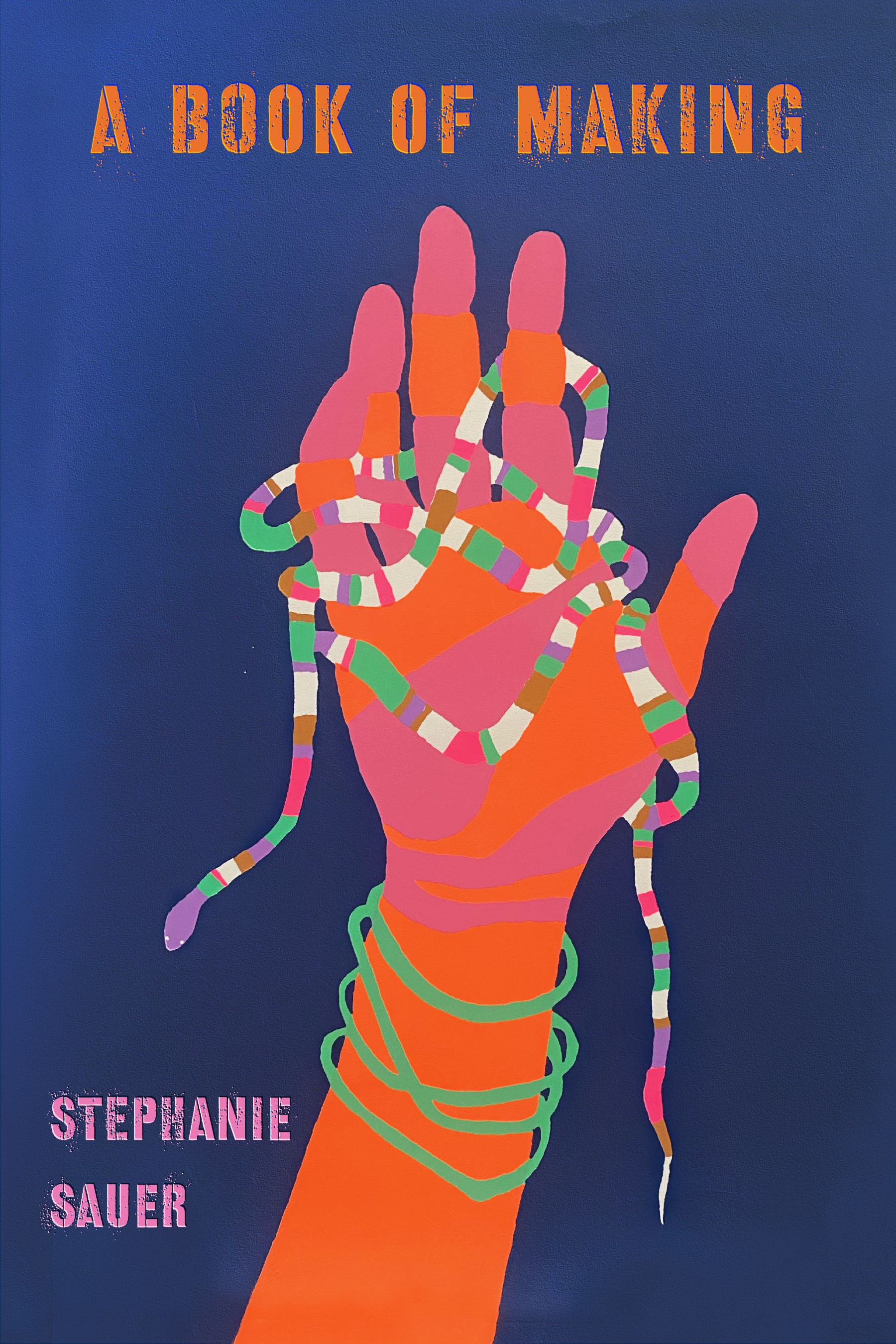
A Book of Making is an exploration of what it means to make art, books, and a life within global capitalistic systems shaped by gender, class, colonialism, geography, and cultural power. Blending lyrical prose, visual texts, memoir, criticism, and fragments of archive, the essays reflect on how makers make and how makers are made—from the pleasures of bad art, cliché, silence, and tactile books to collaborative translation, independent publishing, the visa complications of a same-sex partnership straddling two continents, and the complicated histories embedded in paper, language, and the book object itself.
The book's form shifts alongside its content, blending verbal and visual languages to move past mere illustration into a fluent, tactile code-switching. Sauer's journeys take her from driving a library bookmobile through conservative California hill country to Brazil’s independent publishing communities, from country music and family stories to Adrienne Rich, Indigenous cultural memory, and the destruction and survival of books. Throughout, the essays ask who gets to make, who gets recognized as a maker, whose histories and languages are preserved or erased, and what forms of practice might resist the demands of perfection, productivity, and cultural authority. At once playful, political, intimate, and materially engaged, A Book of Making is a meditation on process as a form of resistance—and on making as a way of staying curious, connected, vulnerable, and alive.
"In A Book of Making, Stephanie Sauer beautifully and movingly links her biography with her own artistic practices, opening up a space of creative freedom and becoming where artists can be inspired to work, especially in claustrophobic and oppressive environments. In one essay about the relationship between writing and her hands, Sauer describes how life inscribes itself on the body, which we often overlook as a tool of art-making while instead prizing the mind. The importance of re-examining the overlooked runs throughout this book as Sauer urges us, in the spirit of making, to find our way back to the body, to the unconscious, to play and mess and fun. Ultimately, Sauer guides us toward engaging with our most raw and authentic selves, so that we might take the very things that try to break us down and define us and refashion them as art." —Ryan Rivas author of Nextdoor in Colonialtown